When planning interior environments for healthcare, leisure or education settings, performance and compliance will always be critical, but so too is design.
Facilities Managers, Architects and Interior Designers are increasingly looking for ways to visualise how interior protection solutions will look and feel within a finished space, not just how they will perform.
That’s where design boards come in.
What Is a Design Board?
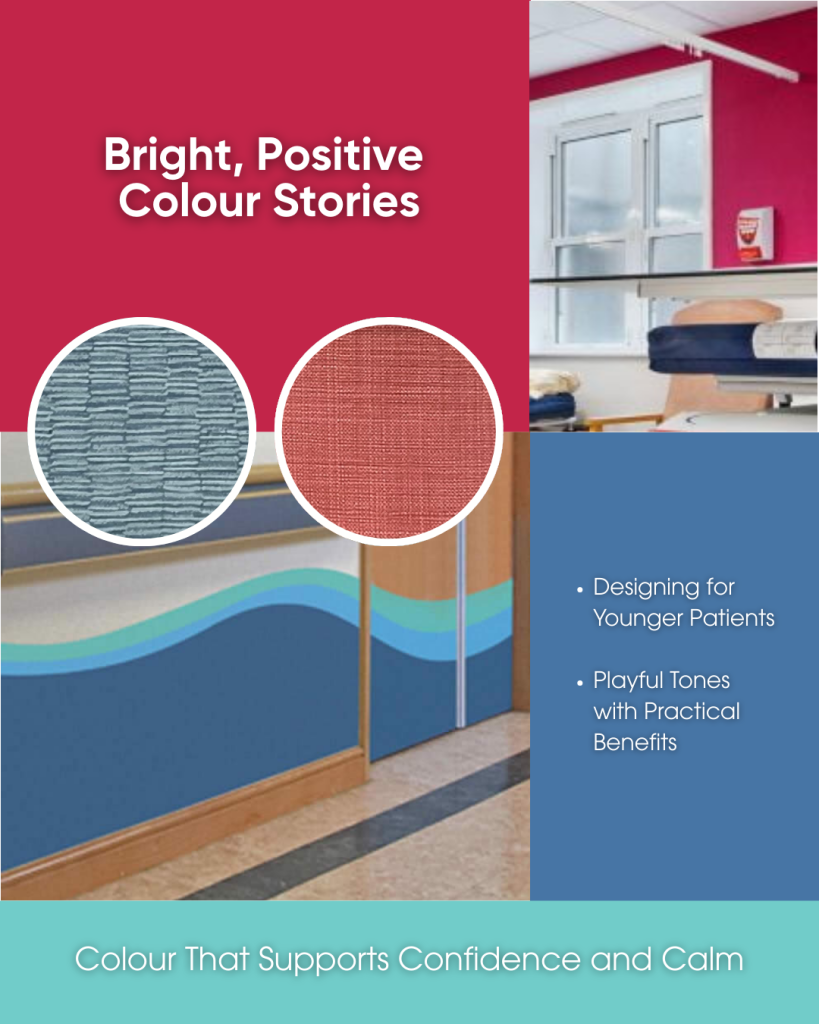
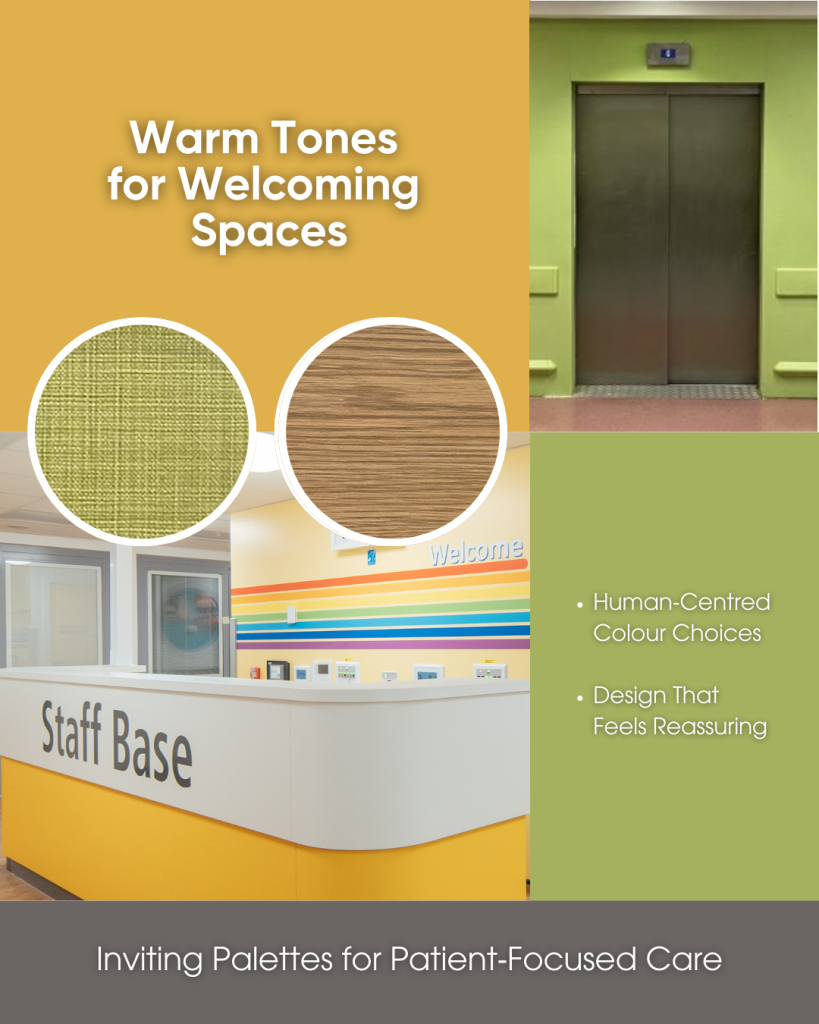
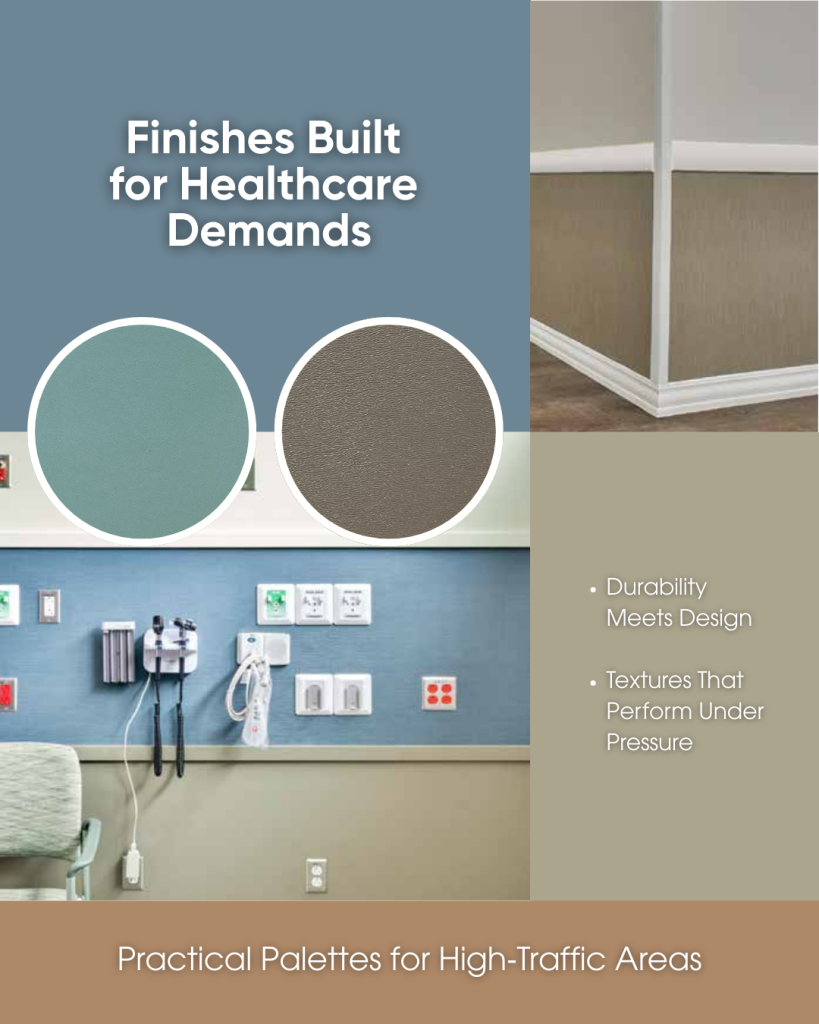
Similar to mood boards, but tailored specifically to interior protection and safety products, Intastop’s design boards help translate technical specifications into real-world environments, combining colour, texture, durability and compliance into one cohesive visual concept.
Our design boards are a curated visual presentation that showcases how different interior protection products and finishes work together within a scheme. Rather than viewing products individually in a specification document, stakeholders can see how complementary or contrasting colours, textures and finishes interact across a space. This makes it much easier to picture the final environment and supports more confident specification decisions.
Each board is bespoke to the project and can include samples of:
- Door protection and impact sheet colourways
- Handrails
- Durable wall coverings and wall protection wallpaper
- Colour-matched accessories and finishes
Bridging the Gap Between Technical Specification and Visual Design
Interior protection products are often specified for their durability, hygiene and compliance credentials, particularly in high-traffic or vulnerable environments such as hospitals, mental health facilities, care homes, schools and leisure centres.
However, these environments also need to feel welcoming, calming or energising depending on their purpose. A hospital corridor should feel calm and welcoming rather than stark and clinical, while a children’s play space or gym should feel energetic and engaging.
Design boards help bridge the gap between technical performance and visual design, allowing Facilities Managers, Architects and Interior Designers to see how protective systems integrate into the wider interior scheme.
Colour and surface finish play a particularly important role here. Materials reflect light differently depending on whether the finish is matte, satin or gloss, which can influence how bright, clinical or calming a space feels.
This is where Light Reflectance Value (LRV) becomes an important design consideration. When considered early in the design process, LRV helps ensure appropriate contrast between surfaces so that features such as handrails, doors and walls remain clearly visible.
This is particularly important in healthcare environments where good contrast supports accessibility and safer navigation for patients, residents and visitors.
Seeing materials side by side on a design board allows project teams to assess colour contrast and reflectivity much more easily before final product selections are made.
Read our guide to Light Reflectance Values (LRV) in healthcare design
Seeing the Concept in Real Projects
The benefits of design boards become clear when looking at completed projects where protection and design need to work together.
At Hereford County Hospital, Intastop delivered a comprehensive interior protection scheme within a busy clinical environment. Wall protection, door protection and handrails were specified to withstand high levels of daily use while still maintaining a clean and modern appearance throughout patient and circulation areas.
Read the full case study here https://intastop.com/case-studies/hereford-county-hospital/
Design boards are equally valuable in leisure environments where visual appeal plays a major role in the overall experience. At Little Monkeys Children’s Play Area, colourful wall protection and vibrant finishes were used to create a fun, engaging space while still protecting surfaces from heavy wear and impact.
Read the full case study here https://intastop.com/case-studies/little-monkeys-childrens-play-area/
In specialist projects, the design board process can also help align technical requirements with interior design ambitions. At Bawtry Primary School in Doncaster, Intastop worked with the design team to present coordinated finishes across multiple protection systems. By showing how these elements worked together visually, the design board helped stakeholders confidently approve the final scheme.
Read more here https://intastop.com/case-studies/582/
Using Colour to Shape the Environment
Colour plays a powerful role in shaping how spaces are experienced.
In healthcare environments, softer tones such as blues and greens are often used to promote calmness and reassurance. In education or leisure settings, brighter colours can introduce energy and support brand identity. Murals and graphic elements can also be used to create interest, support wayfinding or provide distraction in environments such as paediatric healthcare settings.
Design boards allow these different elements to be explored together, helping project teams develop interior protection schemes that support both practical performance and the emotional experience of a space.
Explore wall murals and graphic protection solutions.
Supporting Better Specification Decisions
Ultimately, design boards are a practical specification tool.
By allowing project teams to visualise materials, colours and finishes together, they help remove uncertainty from the specification process. Stakeholders can see how the final scheme will look, compare options more easily and gain approval with greater confidence.
For Facilities Managers, Architects and Interior Designers, this makes it easier to balance durability, compliance and aesthetics within a single coordinated solution.
Planning a New Interior Protection Scheme?
Our team can create bespoke design boards tailored to your project, helping you visualise colour palettes, finishes and protection systems before specification.