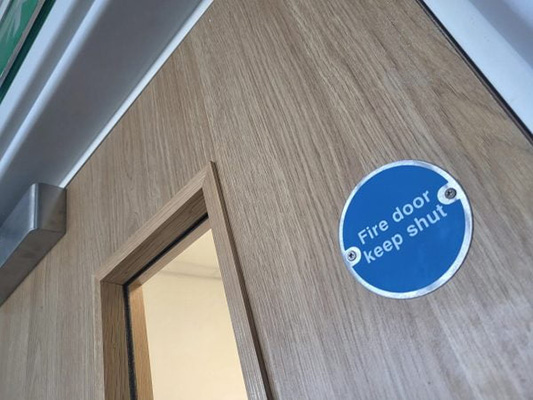
Fire doors are an important part of a building’s fire protection. When properly installed and maintained, they help to slow the spread of fire and smoke, protecting escape routes and giving people more time to leave safely.
However, everyday use, accidental damage and general wear and tear can all prevent a fire door from working as intended. Carrying out a simple check can help identify obvious problems that need further attention.
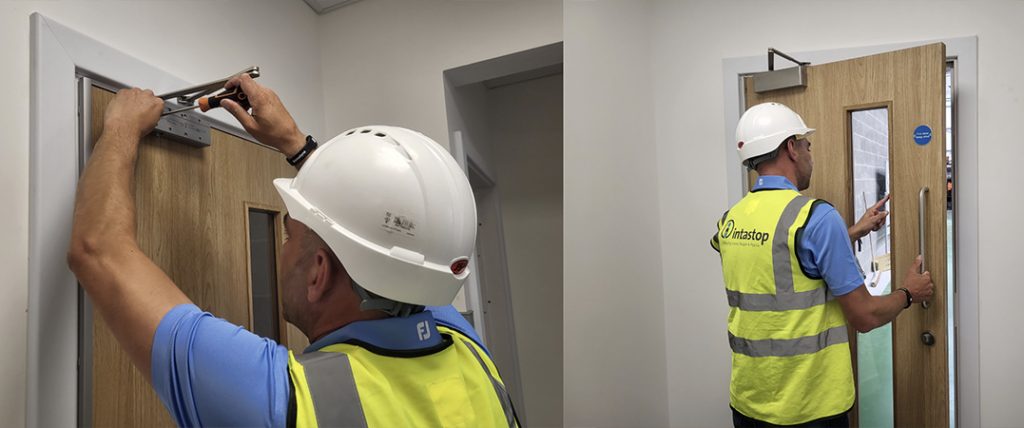
As demonstrated in our Simple Fire Door Safety Check video, there are several things you can look for in the first instance.
-
Look at the overall condition
Check the door, frame and surrounding wall for visible damage. Look for splits, holes, warping or damaged glazing, as well as any alterations that may have affected the door.
Where certification labels or markings are present, these can help confirm the door’s rating and provide traceability to the manufacturer. However, the absence of a label on an older door does not necessarily mean it is unsuitable and should be assessed as part of the building’s fire risk assessment.
-
Check the gaps
When the door is closed, the gaps between the door and frame should be even around the top and sides.
A simple gap-checking tool, like the Intastop Fire Door Safety Checker shown in the video, makes it easier to spot gaps that may be too wide. Government guidance states that these gaps should be no more than 4mm.
-
Inspect the seals
If intumescent strips and smoke seals are fitted around the door or frame, check that they are present, firmly attached and undamaged.
They should make contact with the door or frame and must not have been painted over. Intumescent strips expand when exposed to heat, helping to seal the gaps around the door, while smoke seals help restrict the movement of smoke.
-
Check the hinges and fittings
Look at the hinges to make sure they are firmly fixed, with no loose or missing screws. Other components, including handles, locks and glazing should also be secure and free from obvious damage.
-
Test the self-closing device
A fire door cannot do its job if it is left open or fails to close fully into its frame.
Open the door fully and release it. It should close completely without sticking or catching. Repeat the test by opening the door to around 15 degrees before letting go. The closer should still pull the door fully shut and overcome the resistance of the latch.
What should you do if you find a problem?
Report any damage, excessive gaps or problems with the self-closing mechanism immediately to the building’s Responsible Person, facilities manager or fire safety representative.
A simple check is a useful first step, but it does not replace a full fire risk assessment or inspection by a competent fire door specialist. Any necessary repairs or replacements should be completed by someone with the appropriate knowledge and experience.
Under the Fire Safety (England) Regulations 2022, Responsible Persons in residential buildings with a top storey more than 11 metres above ground level must check communal fire doors at least every three months and use their best endeavours to check flat entrance doors annually. Fire doors in other settings must also be properly maintained and kept in good working order.
Taking a few minutes to look more closely at a fire door can reveal faults that might otherwise go unnoticed. If something does not look right, report it, don’t leave it for someone else.
For further information, read the latest government guidance on routine fire door checks.
Request a Fire Door Safety Checker or Book a Survey
The Intastop Fire Door Safety Checker offers a quick and simple way to identify gaps that may need further attention.
To request a free gap-checking tool, visit https://intastop.com/fire-door-safety/
If you have concerns about your fire doors or would like a more detailed assessment, you can also arrange a professional fire door survey with the BM Trada certified Intastop team.
Book a fire door survey: https://intastop.com/bm-trada-fire-door-surveys-by-intastop/